
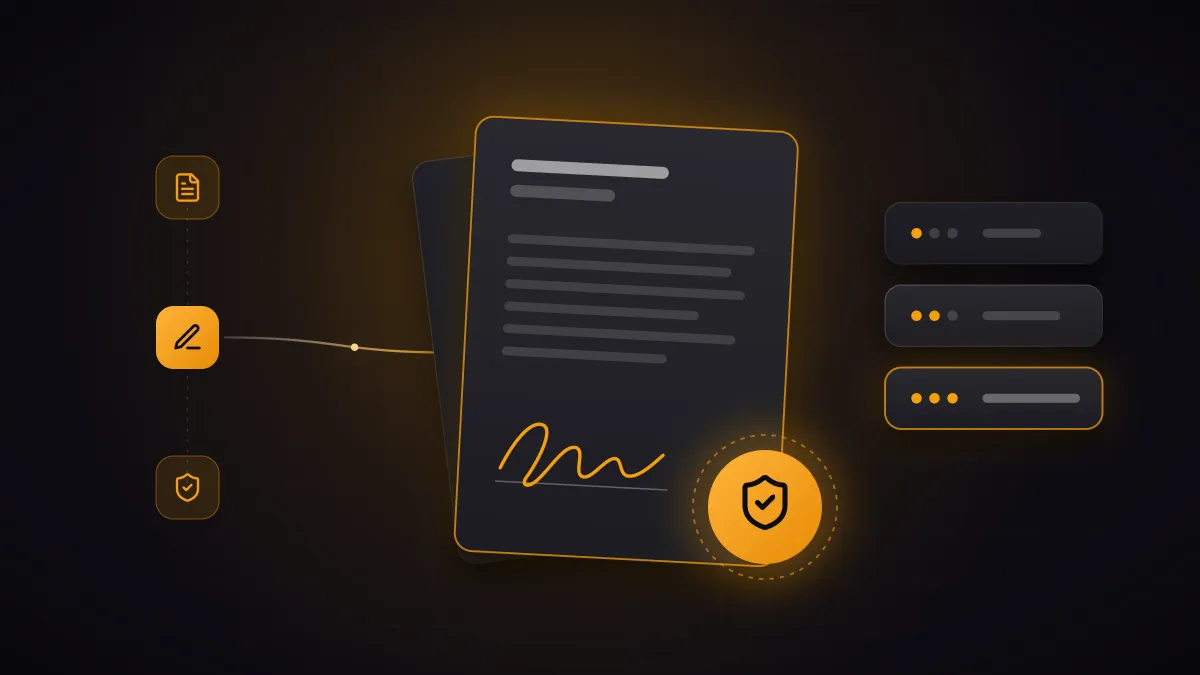
Electronic signatures are regulated uniformly across the EU by the eIDAS Regulation. For most business documents, an advanced electronic signature is enough. Where the law requires written form, you need a qualified electronic signature (QES), which is equivalent to a handwritten signature. So before introducing digital signatures, work out which documents need which level.
What does the eIDAS Regulation cover?
The eIDAS Regulation (EU) No 910/2014 has applied in all EU member states since 2016. It states that an electronic signature may not be denied legal effect solely because it is electronic, and that a qualified electronic signature has the same legal effect as a handwritten one. Switzerland regulates electronic signatures in a law of its own, the ZertES.
What types of electronic signature are there?
- Simple electronic signature: for example a scanned signature or a click on “I agree”. Suitable for internal approvals and documents without formal requirements.
- Advanced electronic signature (AdES): uniquely linked to the signatory, who can be identified, and any later change to the document becomes visible. It suits most contracts and business documents.
- Qualified electronic signature (QES): an advanced signature that is also created with a qualified signature creation device and based on a qualified certificate from a trust service provider. It replaces the handwritten signature.
Which signature do I need for which document?
If no particular form is prescribed for a document, it is also valid when signed electronically. The type of signature then mainly determines how well you can prove who signed what if there is a dispute. If the law requires written form, only the QES will do.
- Internal approvals and minutes: a simple signature is usually enough.
- Quotes, orders, service and supply contracts: the advanced signature offers good evidential value.
- Documents for which the law requires written form: these need the QES.
Some legal transactions still require paper and a handwritten signature, such as wills, and in Germany also the termination of an employment contract. If in doubt, have the specific documents checked by a lawyer.
How do I sign with a qualified signature?
For a QES, the signatory needs a qualified certificate. In Austria, for example, this works with ID Austria. Signature platforms such as sproof sign integrate such eID procedures directly, so nobody has to install software.
How do I introduce digital signatures in my company?
- Record the documents: which documents are signed today, by whom and how often?
- Set the signature level: for each type of document, simple, advanced or qualified.
- Choose a platform: look for eIDAS compliance, hosting in the EU, roles, templates and interfaces.
- Build it into your processes: documents should go for signature straight from the DMS, ERP or CRM and be filed back once signed, for example with Therefore™ and Frends.
- Bring the team along: a short training session, clear rules and a first process as a pilot.
Frequently asked questions
Is a scanned signature an electronic signature? Yes, but only a simple one. It is easy to copy and therefore has little evidential value.
Are electronic signatures valid throughout the EU? Yes. The eIDAS Regulation applies in all member states, and a qualified signature from one member state is recognised as a qualified signature in all the others.
Where are the documents stored? That depends on the platform. Look for hosting in the EU and GDPR compliance. sproof sign, for example, stores data exclusively in European data centres.
Would you like to introduce digital signatures? We advise you and integrate sproof sign into your processes. Get in touch.